Friday, June 20, 2014

Unspent Grief


It shouldn’t be this hard. 

I mean it should be this hard but it shouldn’t be this hard for me. In the work, it isn’t about me. It can’t be about me or my work doesn’t get done. I know this. I’ve seen this. 

“The doctors has to see her next,” the tears were cascading over her lids and her voice was catching in her throat. The “her” in question was silent, being dragged by the arm to the front of the line. Meanwhile, the volunteer gripping her arm lightly repeated herself, tears coating her voice, “Her house took 22 feet of water.” 

Us seasoned volunteers of the mobile clinic, those of us who lived – not in Plaquemines parish but in post-Katrina New Orleans- were a little frustrated. Bussed in from some far away church, the well-meaning volunteers were usually only around for a few days…two weeks at most. By the time we’d train one group they’d be off to other places, or home, their mission work done. But until they left we had to contend with their emotional responses to everything, to everyone.

The little camper-cum-clinic at the center of the volunteer action settled weekly on a shabby stretch of asphalt that once held parked cars for the destroyed and deserted strip mall in the background. Its meager awning didn’t stretch far enough to shade more than a handful of people waiting in line. It was common for 20 plus people to stand quietly, any documents they had managed to scrounge up rustled in their hands. The sun beat down so fiercely that one day we had to throw out all of the condoms we’d set out on a table- they’d been heated to a questionable temperature and felt liquid in their pouches. 

With the volunteer’s emotional outburst Luigi, my supervisor, and I exchanged a look and then Luigi explained the situation without ever addressing the volunteer.

 “John, your house took 23 feet of water right?” He asked it nonchalantly and John shook his head slightly in affirmation. To further prove his point he surveyed the crowd, “whose house took more than 20 feet?” Almost every hand in line went up. The reality was that no one would be standing in the middle of a parking lot in the blazing sun a year after a devastating storm if their situation wasn’t dire. 

Yes, the woman who had been dragged to the front of the line was struggling. Everyone in that line was struggling. But the volunteer was experiencing the situation in a deeply personal way and that was clouding everything. She was visiting the calamity that befell the Gulf Coast and she found herself mired in the sadness of it all. Bogged down by what had become the reality (stark but still real) for anyone living in the area. The resident volunteers had adjusted to it – or in trauma language, had become numb. The numbness allowed us to do our work.

But today I wasn’t numb (enough). Today, at the funeral of a murdered young man who I worked with on a research project, I was that well-meaning volunteer with tears in my eyes. 

I wanted to pay my respects. Scrunched into the balcony, so close to the ceiling my hair almost grazed it, I listened intently. The air was still and the feel and heat of the church was somehow reminiscent of going to church with my grandparents in Texas.

I was ok walking into the service. ok until I saw the program, until I heard the first person cry out. All of a sudden I could feel the tears well up in my eyes and scratch at my throat. I clamped down, unwilling to cry. This wasn’t about me, it was about…

It was about bearing witness. It was about giving testament that he mattered.

But my grief felt misplaced. It felt obtrusive for me to be crying after such a brief encounter. What place do my tears have in the shadow of his mother’s, his brother, his daughter’s mother?

Sorrow and grief are not zero sum; iIn theory I realize that my grief has no bearing on anyone else’s. Still, I would not cry, not really.  Tears fell. I couldn’t help that but by the end of the service, as I – like the hundreds of other people crammed into the sanctuary to pay their respects- filed past his coffin, my head throbbed with unspent grief. 

Where do I put it? How do I spend it?

 In work that is deeply emotional I think it is necessary to be…removed. Not indifferent but able to bookmark your own feelings to deal with them later. It isn’t about being heartless it is about not drowning in other people’s sorrow- not getting lost in your own; not because they don’t deserve empathy, but because it is so much harder to do the work that needs doing when you are trying to make your way through tear-blurred vision. 

My colleagues, for the most part, looked and sounded more like Luigi at today’s funeral, but today I was no Luigi and I’m not sure how to be Luigi in this violence work…I’m not sure I want to…I’m not sure I can.

Wednesday, May 21, 2014

Skin Deep Talent


“What I want to know is, what are you good at? What are your talents, or what you think you were born doing well?”

The question was well-timed, coming as it did, on the heels of an older woman who had managed to hijack the five-person youth panel discussion with a 10 minute rant. Not a rant but definitely a hushed lecture responding to most of the points the panel had made directly or indirectly in their 30 minutes on stage. 

The question was a bright spot- a positive way to not only return the panel to the panel (in an audience full of black and brown folks, no one really wanted to interrupt a gray-haired elder) and wrap it up on a high note. The moderator smiled brightly and turned to the three young men and two young women on the stage, to offer them the floor. 

Jace, deep bass voice steaming out of a dimpled baby face, answered first. “Running. My family says since I was a baby I’ve been running. I’m good at running.” He pushed the microphone over to the young woman to his left. She shook her head a little. The rest of the group sat quietly, even as the moderator revisited the question. 

“I think everyone should answer this one.” She focused her attention on the young woman Jace had motioned toward. “What are you good at?” 

The question was met with silence. “I mean, you are gorgeous. Let’s just start there. You are gorgeous – you both are,” she nodded at the other young lady on the panel, “how do you use that gorgeousness toward other talents?”

I may have misquoted that last line but she said something closely resembling that. I was shaking my head violently and looking for somebody, anybody, to share my derision of this turn of conversation. Everyone seemed to be looking intently at the stage. 

A few more moments of silence and as the facilitator finally ended the panel the young woman leaned in slightly toward the mike, “biology…” her voice trailed and was swallowed by the shuffle of people leaving the stage. 

You are gorgeous? Seriously? A woman’s talent is how gorgeous she is? Even more heinous to me, that notion of “pretty as credentials” was presented by a woman in a leadership capacity.
What do we do with that?

Already the young women spoke the least. The young men answered questions first and most often. Each of the young women spoke no more than twice – less than five minutes combined of a 30 plus minute presentation.

I know that beauty – regardless of gender- is a commodity in this country. Beautiful people get paid more, beautiful children get attended to better. But beauty isn’t a talent. Beauty can be an asset, but it is an asset with precarious spikes. Precarious because beauty – by mainstream American standards – is a fleeting thing that (especially for women) recedes with age. But more importantly, viewing beauty as a talent can minimize the way a young woman sees herself and her potential. That biology talent fades into the shadow of the beauty one.  And while biology talent can lead to confidence in her ability to compete and a STEM career, “beauty” demands external judgments and validation…to what end? 

How many pretty girls become models or actresses? Beautiful as their only acknowledged talent, what else is there to aspire to?

My sister made fun of me when my nieces were born. I was careful in my language to compliment them, even as infants, on how smart I knew they’d become, trying to counter each, “aren’t you so cute” that sailed- with the best of intentions – their way. 

Hell, I’m guilty of it too. I see a tiny nugget laughing joyously or sleeping peacefully and I think, how adorable—I say, “how adorable.” Being adorable isn’t the problem, acknowledging adorable at the exclusion of everything else is. Beauty as single identifier. 

Beauty may be all we know of someone when we are meeting them for the first time, but when they are offered an opportunity to introduce themselves to the world I hope they are able to express more than what is skin deep, I hope we adults encourage them to know what is more than skin deep.

When the young woman returned to the seat in front of me I tapped her on the shoulder; all I could think to say was, “your talents are more than your beauty.” Lame, I know. She smiled uncertainly at me and said thank you. And then she returned to her day. We all returned to our day.


Wednesday, May 14, 2014

Breasts a-Plenty


I have a conflicted relationship with my breasts; they are the most sexualized part of me. And they are pretty big, at least in relation to the rest of me. Big in an unassuming way most of the time, unless I am not vigilant in the way that society has taught me…to wrap them up, strap them down, conceal them under layers.

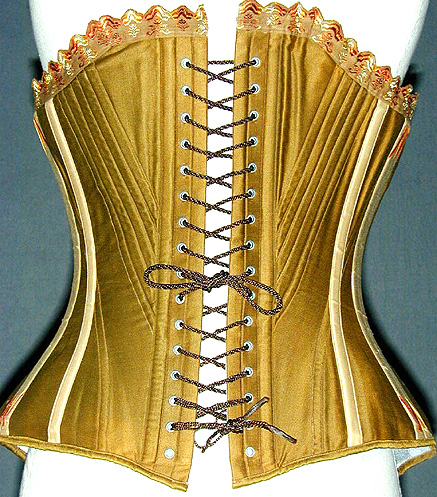
Some of the stories about my breasts are funny. At a renaissance faire a few years ago I decided I would try on a corset. I’m not quite sure what I expected.

A waif like woman with pert little breasts was laced up before me and she emerged with a slightly accentuated bosom and a tiny little waist to complement it. Her gaggle of guy friends smiled at her and told her how great she looked.

Then I walked out. My breasts were suddenly contained and simultaneously unrestrained. The laces pushed them forward toward my chin. All of a sudden, what I spend a great deal of time trying to – not hide but de-emphasize- was blatantly on display. The gaggle of guys immediately stopped talking and turned in my direction. So stunned, they failed to even pretend they weren’t staring. 

“I look like porn,” I told Goti. He stammered for a moment and then, with too great a pause between my comment and his response, assured me I didn’t. 

I laughed about it then. It was my doing. It was a controlled (mostly) environment. Boobs at a faire…no big deal.

There are darker stories though…some that don’t seem so bad if you are simply looking in for a moment. A kind of microagression of the female gendered form. But for me, they are stacked on top of each other over years. And with time, they have constructed the story of my body and how I inhabit it. 

Even as late as graduate school (in my late 20s) people were still policing my body and the way I looked. I had a job in the back of an office- a dress code had never been laid out and it wasn’t uncommon in the hotness of summertime Louisiana to see women in shorts and tank tops. Usually I erred on the side of more material but on one particular afternoon, knowing I’d be in class after a few short hours of sorting mail, I wore a tank top and a pair of shorts. I distinctly remember staring at myself in the mirror before I left home that day, contemplating the shirt, a fitted green striped number that showed my cleavage (as any shirt that has any kind of neckline is bound to do). I had another shirt I could wear over it but in 90+ heat and 90% humidity it seemed absurd. 

Part of my resolve about that shirt, which I’d had for some time and never worn, was about owning the body I was in. and so I began the walk to my job, through midcity. I was cat-called on the way and my resolve about my shirt wavered. But by that time it was too late to turn back and so I used my bag to cover my chest and continued on. 

By the time I reached the office I was already frustrated and feeling low. And then my boss, an older woman, called me into her office to ask me- in the form of a not-so-questioning question- If I would be changing before that night’s event.

Not a singular incident, I had a boss who stared at my chest in one-on-one meetings even after I asked him, pointedly and with no abstraction, to stop staring at my chest.

In those instances I felt lewd and inappropriate and the ideas about a part of my body I have no control over were reinforced. I should cover and be ashamed. I immediately suspected myself of wrongdoing not the person responding to me. 

These are strange things to recount so many years later except, when I read about the young woman who was kicked out of her Homeschool Prom because her dress was “too provocative”, I am reminded that we simultaneously sexualize women’s bodies and then damn them for being (by someone’s definition) “sexy”.

My impulse was to defend her dress as many commenters to her blog and the Jezebel piece did. I’m glad she is getting support in the wake of such a messed up situation. But pointing out how she didn’t break the arbitrary rules laid out for women’s dress doesn’t address the arbitrary rules. 

People cry slippery slope; people will wear anything. I live in the Bay Area, I know, I’ve seen some interesting things and in some parts of Berkeley and San Francisco you can get away with being nude. But the slippery slope works both ways. How much do we control, do we criticize, do we police? How do you “normalize” what is deemed sexy or sexual on a myriad of bodies?

I’m tall, skirts that fit me in the waist often look short. I have big breasts, even ignoring the cleavage issues, shirts pull across my chest and accentuate what’s there. 

I have a silk button up dress that I once loved. It was professional enough to wear to work and it was comfortable. Working a career fair years ago, and wearing the dress, I struck up conversation with one of my table mates. It was professionally friendly – I don’t think we had even exchanged names. I excused myself from my table for a moment and he waved me over to him- I assumed to make a formal introduction. Instead he shook my hand, held on to it and pulled me closer to him while he whispered something foul to me about my legs and what part of his anatomy they were impacting.

I didn’t wear that dress again for years. I couldn’t put it on without feeling like I was soliciting unwanted attention, like anything inappropriate sent my way was by my own invitation.

In college I seldom wore anything form fitting. My sophomore year I acquired, and fell in love with, a fitted burnt orange tank top. It was so fitted I could wear it without a bra. One day on the yard, the denim shirt I wore unbuttoned over it blowing in the breeze, a male friend of mine kept gazing down at my breasts. Finally he said, “put those away, they are distracting me.” I picked up his t-shirt that was covering his zipper and proceeded to talk to him while gazing at his zipper. After a few flustered and uncomfortable moments he swatted my hand away. It was my silent protest.

My relationship with my breasts is complex. 

I am still mindful of the fit of my clothes and the audience those clothes will interact with, even as the feminist in me rages against the idea that I am somehow responsible for the way men – or anyone – look at or react to my body. It doesn’t mean I don’t think about it; I hope it doesn’t mean I always will.