Tuesday, April 8, 2014

Packing: better late than early


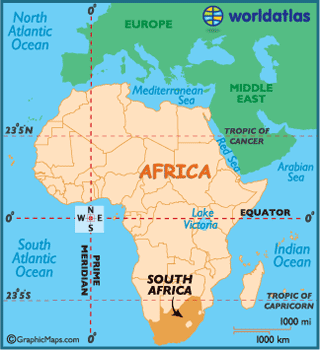
I packed weeks in advance. And by packed, I mean I had a heap of things I was certain I’d need during my two year stint in South Africa as a Peace Corps Volunteer. I remember getting the handbook in the mail and reading it feverishly – digesting every little morsel and trying to intuit whatever was unsaid. 

Would there be electricity? Would I have to haul water? Would people speak English? What language would I learn?

My mind spun with possibilities and uncertainties. But the certainty I had was the mounting pile on the living room floor. In retrospect, my parents were gracious. My mom didn’t nag me about it. She didn’t demand I move it to a less visible place- my room for instance. She let me place jeans and shirts, and books and journals and, my god, I don’t know what else, into that ever growing pile. 

Maybe a week before I was scheduled to leave I realized it was time to actually put things into the suitcase in preparation for my departure. I dissolved into a puddle of tears, unable to wrap my brain around the simple task before me. 

The only solution I could muster was an unintelligible and tear filled call to my then-best-friend. If she understood nothing else she understood the panic in my voice. 

I answered the door and then stood in front of mount-crap-I-don’t -need. She spent a moment taking it in and then reached for the suitcase and began to hold things up to me.

“Do you need this?” I’d answer with a feeble yes or uncertain no. Yeses were folded and put into the cavernous luggage and nos were placed in a much smaller pile just out of the way. I don’t know how long it took – forever, an instant- she zipped it up and then…magically floated back home (or more likely hugged me and then drove home).

I was packed.

Only I wasn’t. The night before my departure I weighed my bags. Whatever my limit was, I was so far beyond it that I had another bout of panic. Only this time, instead of calling for outside reinforcements I simply unzipped my suitcase and my dad’s Air Force duffle bag (in use for sentimental and no practical reasons) and began exiling contents to the now growing pile of discarded things. 

This time my bags were whittled to within a reasonable threshold of the allotted weight. Two major pieces of luggage and a carry-on bag. I thought I was traveling light.

I wasn’t. 

Now I travel light. 

My move to South Africa taught me three major lessons:
1)   If you can’t carry it comfortably you don’t need to take it

I     2) you forget it you can probably buy it and if you can’t you can probably do without
3   

3)Pack the night before

I’ll start with the first one:  If you can’t carry it comfortably you don’t need to take it. Two major pieces of luggage and a carry-on seem like a perfectly reasonable amount of luggage for a two-year trip. And truthfully, I wouldn’t begrudge someone that amount of luggage. But what I learned, sentimental duffle bag strap digging unsentimental cuts in my shoulder from the concentrated weight on the thin strap, was that it was heavy and awkward. Ditto for the wheeled suitcase that dug grooves into the red clay “roads” and caught on jagged rocks. Wheels weren’t practical for the kind of travel I was doing. Wheels in a village context were comical. What I needed was a good sized backpack with proper straps and no requirement of smooth surfaces to help me lug it about. 

Years later, when I moved to New Zealand for a year I remembered those lessons. I still had my wheeled suitcase, but in the well paved and sidewalked streets of Auckland that made sense. My second piece of luggage was a bright orange hiking backpack I purchased when leaving South Africa. It is still my primary piece of luggage 13 years later.

Lesson two: If you forget it you can probably buy it and if you can’t you can probably do without it. I packed a lot of things when heading to South Africa. My thinking was, “what if…” what if they didn’t have it? And so I tried to foresee every little thing I might possibly want or need. Not only is that exhausting, it is also impossible. Not only is it impossible, it also defeats, in some small way, the purpose of travel.

Sure people travel to see things. The Blue Nile Falls, Tikal, the pyramids, lions in the wild. People plan trips to cross things off of their bucket lists. But one of the reasons I travel is to experience something
different. That can be as simple as food but often includes transportation, communication, friendship. If I’ve packed my bag so full of stuff I already know there is little reason (or room) to experience new stuff.

As much as I love Sour Patch Kids (and adore the friends who sent me bags of them while I was gone) I fell in love with Jelly Babies in South Africa, and rotted my teeth with those while I lived there. I washed my clothes with Omo (which ate through my whites and the skin on my hands but wow my clothes were clean!), in Liberia I learned how to start a coal pot (environmentalists close your eyes- I knotted a polystyrene bag in several places to make a wick, piled the charcoal around it and lit the top) and made boot-leg Pad Thai with instant noodles, onions, egg, and peanut butter on the coal powered stove, and in Uganda learned to make a stovetop pineapple upside down cake that made me quite popular. Those are all things I associate exclusively, not with my time in America but, with specific times in specific countries. 

There is also just the practicality of what I actually need. My early letters home to my parents during that first trip, I mentioned things I didn’t have but “needed”. I talked about things like isopropyl alcohol and hydrogen peroxide. A few months into my stay things began to settle and began to learn my new home. Fast forward a year and my family came to visit and they came baring gifts…among them, things I lamented the absence of in my early weeks away but had long forgotten or replaced with the local equivalent – Dettol for instance. It was the sweetest of gestures from my family, but unnecessary once I began to make South Africa home.

Finally, I’ve learned: Pack the night before. My first grown-up international trip trained me and I haven’t managed to break the habit yet. It drives my mother crazy even all these years later. When she knows I have a trip planned she’ll begin asking me a week or two out, “have you packed yet?”. My answer is always the same, “When do I leave?”.

It isn’t that I don’t think about what I need to pack, or even that I don’t make a tiny pile off to the side somewhere of things that will probably make their way into my bag(s) (anything less than a year and the chances of me having more than one big bag and a daypack are slim…circa lesson one); but why would I do it early? What good does that do? As long as I have my ticket, my passport, and cash, any packing omissions can be rectified. And besides, it gives me something to focus on in the anticipatory moments before a trip. I’m sure there are reasonable reasons why I should pack in advance but that isn’t my way and in travel preparation I am apparently a creature of habit.

Fifteen years ago I left on my first major trip and these are the things I learned and I continue to follow these basic lessons wherever I go. 

A few years ago when I was moving to Uganda I was packing my bag in the wee hours of the morning. One of my nieces padded down the stairs heading for her parents’ room because she had a bad dream. I intercepted, opting to let them sleep while I soothed her. I was a few hours from my flight to Kampala and clothes were still strewn about the dining room but I took a moment to sit down with my niece on my lap and rock her gently back to sleep. A few hours later my brother-in-law snapped a picture to capture the moment of me fast asleep sitting upright with my niece across my lap.

I hadn’t finished packing before I dozed off. For my mom that was a lesson in why I should pack early, for myself it was simply affirmation I was doing things right, I made my flight fully(ish) packed and on time. I wouldn’t know how to do it any other way.


Tuesday, March 18, 2014

$5 proves you care


.2012 Oakland Homicide Map

"Oakland is my home: there's too much killing going on." Jay had stopped to read the white banner, slung between a row of recycling bins along Lakeshore Ave. The pictures beneath it are sadly familiar to anyone who has lived in Oakland for at least a year...the homicide spread of the Oakland Tribune (complete with names and pictures) for the last few years.

It was a strange sort of contrast, the California blue sky, brilliant and perfect like Crayola makes colors, cloudless. The sun shone down brightly, gently warming me in my jeans and t-shirt, the breeze whispering across Jay's legs.

"Do you have someone on this list?" an older black man with a few wrinkles and a speckling of gray walked toward us and nodded his head toward the sign.

"I don't," I responded, "but I work in violence prevention at a non-profit."

He didn't respond to that intersection of our missions but continued to speak. "I've lost too many people. I put this banner together myself, " he paused for a moment, "with my own money. My son and I put together a CD and we're selling it for $5 so we can buy t-shirts and a billboard with the same message." He paused again. I waited for what I knew was coming.

"Do you want to buy a CD?"

Not right now, I answered and smiled.

"That's the problem," his voice changed from genial - if distracted - to harsh and his expression hardened as well. "White folks pass by here and hear what I'm doing and they give me $20. They don't even take a CD they say, 'give it to someone else' but black people- black people don't care. We don't donate. That's the problem."

At this point he had already raised my hackles, and he continued.

"I'm going to give you one of these CDs. You take it. Take it. That's the problem..." he continued to mutter. Jay had begun rummaging through his wallet just as the man began his diatribe - but having nothing smaller than a $10 he'd declined to hand over he pasted a bland smile-like expression on his face and took the CD I refused to accept.

Livid.

I was cursing mad.

Who the hell was this man to tell me what I cared about? To lump me into a category of mythical people who don't care about Oakland because I don't want to fund his t-shirts and a billboard? Who wasn't even listening to the work I was involved in that intersected with his mission?

I cursed all the way to Arizmendi. I cursed in Arizmendi. I cursed to Jay, whose bland expression shifted into amusement.

"Just because I don't want to buy into his theory of change all of a sudden I'm the problem?" I spat. "He doesn't know me. I am involved with this work every day and we do more than make t-shirts."

Jay laughed. I wasn't amused.

The situation reminded me of the charity trolls on the same stretch of sidewalk. They hold clipboards and try desperately to make eye contact and lure you into a conversation. "Can you spare $5 for [insert enormous international aid institution whose work I'm either unfamiliar with or not particularly impressed with - especially if they are hiring charity trolls]?"

"No thanks," I'm polite.

 Someone asked me once, in the same emotional guilt inducing way as the violence man, "you don't care enough to spare a few dollars?"

Immediately I was irritated. Never mind a bout with shisto and several bouts with malaria while I was working in the countries they have pictures of, but the implication is that I don't give a crap.

And it shouldn't matter. I know it doesn't matter. But it still gets under my skin. It still irks me. I'm still irritated that people have the audacity to think that the only way to help, to care, to make a difference, is their way.

On the violence front, I know the other component at work is trauma. Losing someone to homicide is traumatic and the ways trauma impacts people are often mistaken as character flaws rather than symptoms. It isn't unusual for people with trauma symptoms to be angry, irritable, distrustful, to be short with people who care about them or are on their side, to be sad. I don't know that that man has trauma symptoms but I wouldn't be surprised if he does. I should interact with him...with everyone really...as if they might. Give people the benefit of the doubt and deescalate wherever possible.

And I did...kind of. I didn't curse at him. I didn't even engage with him after he began his tirade about my lack of heart. Instead I walked away, cursing only loud enough for Jay to hear me. And when I finished cursing and venting to a bemused Jay I located my center again and was reminded that the man cares too...in his own way.

Sunday, March 2, 2014

The Paper Principle


I view a lot of my world through a travel lens. I am prone to packing up and being gone for a while and I learned long ago that if I pack it I have to be able to carry it. That often means I only take a few books because books are heavy. With only a few books in tow, it isn’t unusual for me to be finished reading them by the time I land or shortly thereafter. That sucks. But physical books allow me to trade or barter with them. That rocks.
I don’t really do resolutions. I often make lists, but in my brain they are different from resolutions. My lists usually excite me. My first stint in Africa I had a to-do list that included things like seeing the big five and going to China. They were things I wanted to do not things I thought I should do. It is a small detail but that detail makes me eager to complete my list rather than feeling guilty if I don’t. 

This year I didn’t make a proper list but I decided I wanted to write and read more. “More” in terms of writing is still a little vague but I was specific in my reading: two books a month. 

It wasn’t unthinkable. My first week in my village when I was in the Peace Corps I read both Dr. Zhivago and Anna Karenina. I had a lot of time on my hands as I adjusted to my new home where I knew no-one and my job was on holiday until the New Year. Read so closely in proximity, those books are inextricably linked in my brain, depressing novels with snow where someone dies tragically. 

It didn’t stop there; I read Long Walk to Freedom, and the Power of One. I read Ishmael and the Alchemist. The list goes on. In Liberia I read the Gospel According to Biff (<3) Fountainhead and anything I could get my hands on. Anything. 

At various phases of my life I read like an addict because I love books. I love stories that unfold in unusual ways and learning about history through fiction or learning about humanity (or the lack of it) through non-fiction. I adore the written word. But somehow, in my adult years, comfortably situated with easy access to both libraries and bookstores, I read less.

Enter my 2014 to-do list. Two books a month. At least. And I’ve been so joyful in rediscovering books.
I’ll try anything, fiction or non-fiction, acclaimed or seemingly interesting.

Most recently I’ve finished the Fault in our Stars, Dwarf, and the Idealist. Now I’m in the midst of Mountains Beyond Mountains, Devil in the Grove, and Little Brother. I’m beyond the two books a month mark because I love to read. So it is easy. 

Rediscovering my utter adoration for the written word, I’ve been part of a lingering debate about books vs. eBooks. I am somewhat baffled by the often passionate debate because to me the paper or the kindle is simply a conduit. They are like bread while the unfolding stories are butter – I mostly eat one to make it easier to consume the other. Or maybe the better explanation is that they are both tools to the same end.


Meanwhile, I currently have 80+ books on my kindle. That rocks. But I have to be mindful if I’m reading near water. That sucks. Kindles have to be charged but handling 500 pages of Dune is cumbersome in paperback (let alone hardcover). There are always tradeoffs.

I love my kindle. It was one of the best gifts I’ve ever received and I use the hell out of it; but I don’t hate physical books. I still have a bookshelf with favorites I haven’t let go of.

Recently, a friend was urging me to buy paper books instead of eBooks to keep local bookstores solvent.
“They are community institutions. They employ people. You buying online is killing them.”

I think she expected a different reaction from me.

“Businesses have to innovate or they die.”

She shook her head but I was, I am, adamant. It isn’t that I believe that capitalism is the great equalizer or that businesses can do no wrong, but I do believe that innovation moves the world forward and trying to hold on to old paradigms – even for good and noble reasons – is short sighted. The typewriter didn’t win over the computer, the telegraph didn’t win over the telephone, and the stagecoach lost to the car. 

I say that even as I love to walk through bookstores and trail my finger over the titles, periodically picking up a book and thumbing through it to see if anything catches my attention between the covers. I say this even as I want small businesses, especially ones that build community, to succeed. I also say this as someone who loves the immediacy of downloading a book from the library onto my kindle and having it disappear on its own accord when the lending period has ended. 

Nostalgia won’t make the eBook go away.
 
The one other argument I hear about paper books over eBooks is censorship and control – very real concerns given governments and zealots’ continued attempts to control what people think and do. Books can be revolutionary, art can arm the masses with information or hope or a glimpse of the past that sheds light on a possible future. Books are powerful.

“E books are easy to alter,” someone told me, “there is no physical point of reference for the change. And it is true. When people decided Huck Finn was too offensive with its use of the historically appropriate use of the N word, and it was published with that adjustment, there were copies to compare it to. There was tangible evidence to contrast one against the other. Who hasn’t changed a document on a computer and lost the original content? I understand the fear that books will become those word documents, irrevocably changed. 

Still, when I think of the potential subversive nature of writing I also understand how important it is to get that message out. In the past people had to print copies (expensive) and distribute them physically. There are only so many places a person can go, there are only so many copies someone can print.  Meanwhile, Cory Doctorow (author of Little Brother) physically publishes his books and makes them available for (free) download.  What is more subversive than reaching the masses with your message – for free?

In all the ways that cyberspace can be manipulated, so too, can physical books. How many people have read the actual text of the bible without various translators’ interpretations of it? Whatever the vessel of dissemination corruption is possible. 

But the answer isn’t simply to cling to what we know, to what is familiar, even when other things emerge that compete or complement it. Neither is it to throw aside things that are familiar simply because there is a new novelty. Things have their places and their pragmatic uses and we use them according to need. Sometimes I need a power drill but sometimes a screwdriver will do. No argument necessary.

Wednesday, February 26, 2014

Broken boats and starfish


I argued with Maureen earnestly. I was leaning on the door frame to my room, she was sitting on the floor of Soni’s room and they were both looking at me –quizzically, maybe. I’m not sure what the expression was exactly. But they were not in agreement with what I was saying. They didn't think I should stop the international work.

A few months away from my departure from Uganda, my plan was to leave international development work altogether. 

Conflicted didn’t begin to describe it. Doesn’t describe it now. 

I’ve been thinking a lot about my career trajectory in one breath and cultivating joy in another. Sometimes the notion that the two can come careening together in an epic and entangled way makes me smile with enchanted wonder. 

What if someone paid me to travel and eat and write (or any one or combination of those things)? I could pay my bills doing something I do anyway! But as I’ve been unable to cobble together a feasible business plan for that dream I instead focus on other passions. Travel still floats to the top but so does making a difference in the world. 

My brain has been ticking. What does my future look like? What is my next step?

Friends urge me to take stock of my skills and consider their application in a wider arena but ultimately I find myself crafting an imaginary position that is neither imaginary nor new. International public health emerges again and again. And I find myself circling back to that conversation with Maureen and Soni. I left that work for a reason.

I spent an evening talking to a new friend about my disillusionment with development. I talked about the macro: money inspired power dynamics, cultural ignorance, unintended consequences, differential pay scales, Sisyphean feats (because we really aren’t clear on the problems let alone the solutions). The list goes on. I rattle them off periodically when the call of some place far off tickles my feet and makes me wonder if just maybe I could manage it. 

He takes more of a starfish approach. 

“If you could help 100 people in the next 10 years doing this work that you are frustrated is not being done, isn’t that worth it?”

I remember having this conversation with a friend while we working in South Africa. She  was frustrated then. Feeling useless then. Wanting the development system to be as dedicated to meaningful change as the people on the ground – host country nationals and foreigners – who stretch the money, work the programs, celebrate each new well and properly erected mosquito net and grieve each mother and infant that die in childbirth and each outbreak of a preventable disease. And then, I urged her to think about each starfish tossed back into an expansive ocean. “It matters to that one.”

It still matters to that one. To those many that manage to find their way back to the water. 

I can’t measure the worth of a person. Not in the line item of a budget, or the salary of a community worker, or the time in transit to a village. I can’t measure that worth to say interventions shouldn’t continue to happen as they are.

I can’t measure the worth of a person and so I struggle with continuing to throw people back into an ocean one by one when I know that the tide will wash them back on shore once the temporary safeguards (programming without infrastructure or sustainability) are gone.

There is no perfect solution; perfect is the enemy of the good. Waiting for a perfect system would mean countless deaths. Countless more than we see now. 

So what then?

When cholera swept through London in 1854 John Snow figured out that drinking water had something to do with it and then the work of protecting the water source became the priority. Energy is wasted if attention is only paid to the effects of something and not the cause.

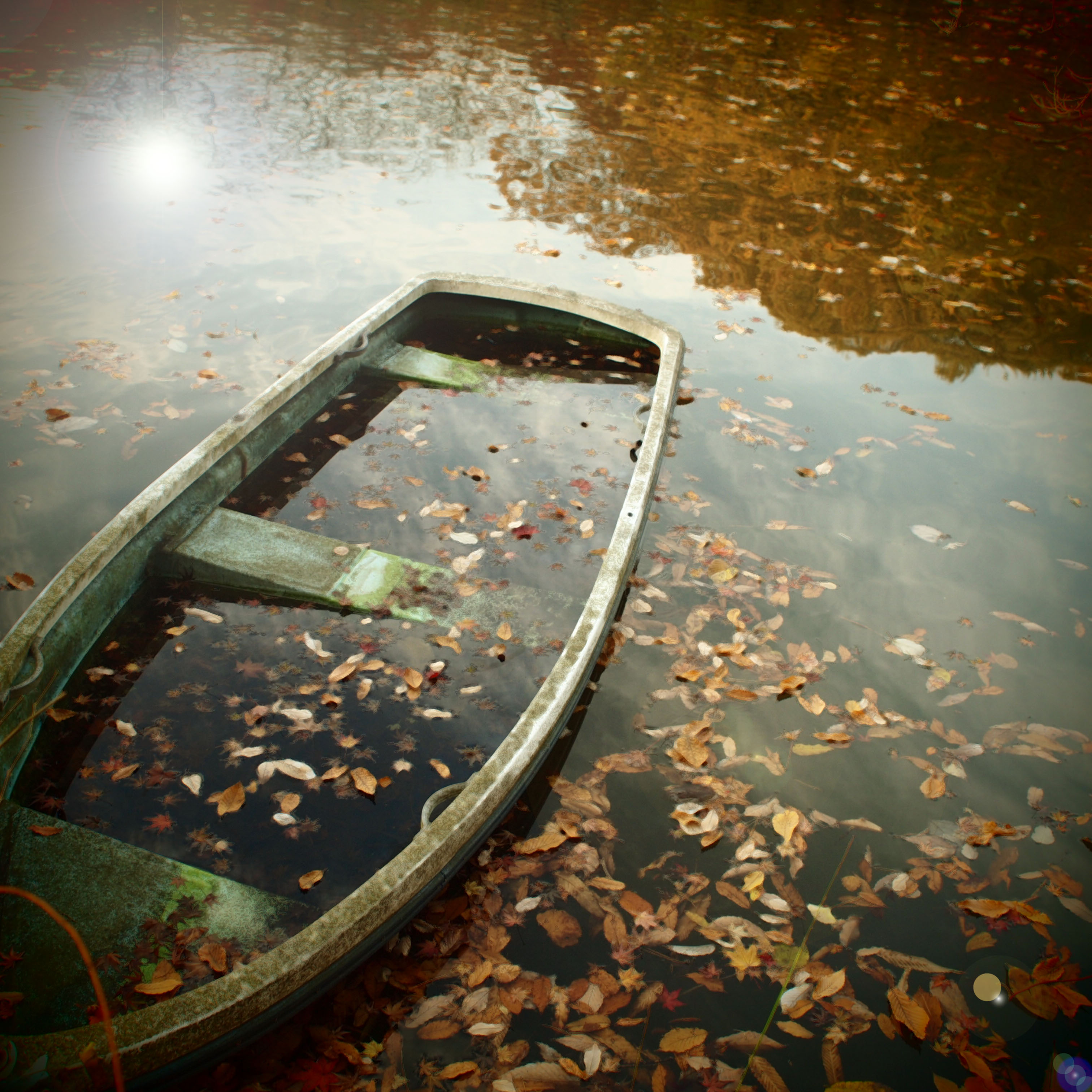
My fear, both when I’m working in a country and when I’m sitting comfortably in my bedroom as I am now, is that everyone is so busy bailing water from a damaged boat that no one has time (inclination) to fix the hole in the boat…or even the hole in the bucket (the development system). 

There are a lot of people doing amazing work helping to save lives, partnering with people to improve quality of life…hell, years of life. But Teju Cole wasn’t wrong when he wrote about the White Savior Industrial Complex. The problems of any region, or country, are complex. Piecemeal answers aren’t the only answers, the ways things are currently done aren’t the only ways they could be done, and good works don’t erase the other inextricable issues tied to poverty, illness, and politics.

My new friend is right that sitting here in the US doing other things isn’t helping. But I am still cautious. I still see the danger that doing something can do whether from unanticipated consequences or feeding a system that needs a lot more than tweaking. 

It is easy to sit by the wayside and “tut tut” the work being done, but that isn’t my intent. I want to repair the bucket, patch the boat. Hell, I want a new boat altogether. To my friend’s point, I need to think harder how to make that happen.